
Living with von willebrand disease (vwd)
A rare disease with unique impacts
Bleeding caused by VWD can affect every part of your life, from your career to your hobbies to your family life. However, everyone's experience is different.
With VWD, bleeds are always a risk
People living with VWD experience different types of bleeds that affect them in different ways. In a Centers for Disease Control and Prevention (CDC) study of 102 women with VWD, 95% report heavy menstrual bleeding, while 92% report bleeding after minor injuries.
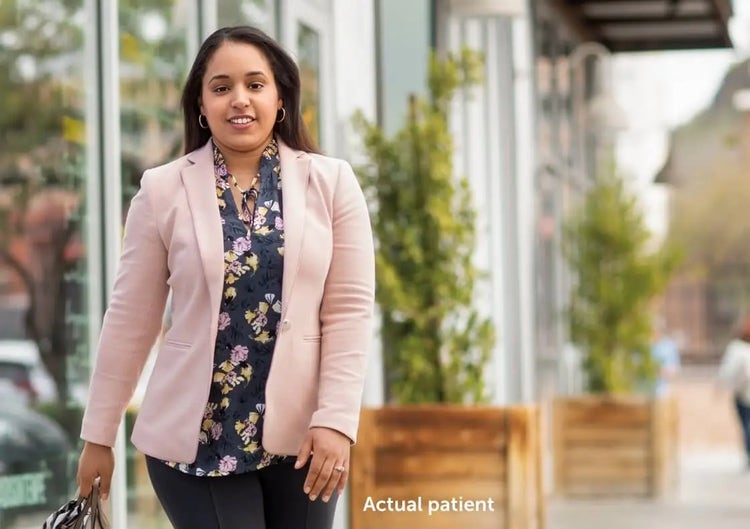
Real VWD patients. Real experiences.

Cuts & Bruises
Leslie’s Story
Diagnosed with VWD in 2003
"When I fell, I would be covered with big, painful bruises, and the cuts I got would bleed a lot."

Menstrual Bleeds
Nicole's Story
Diagnosed with VWD in 2009
"In junior high school and high school, I began to miss days every time I had my menstrual cycle."

Nosebleeds
Erica’s Story
Diagnosed with VWD in 1981
"Over the years, I tried all kinds of different medications. I saw loads of hematologists. They always assumed sickle cell or hemophilia. It was very frustrating."

How VWD can affect women
Even though VWD occurs with similar frequency in both men and women, it's sometimes viewed as affecting women more often. This is likely because women face the challenge of increased or prolonged bleeding during menstrual periods (menorrhagia, or heavy menstrual bleeding) and childbirth.
Some signs of heavy menstrual bleeding include:
- Bleeding for more than 7 days
- Changing a tampon or pad every 2 hours or less
- Passing blood clots larger than 1 quarter
To remember these signs of heavy menstrual bleeding, just think 7, 2, 1.

Is VONVENDI® right for you?
VONVENDI was created specifically to treat bleeding episodes in adults and children with VWD. When infused into your bloodstream, it acts like your body's natural von Willebrand factor (VWF), helping to form clots and helping your own FVIII to work.
VONVENDI is also the first and only recombinant treatment for VWD that's approved for 3 uses, including:
- On-demand treatment and control of bleeding episodes in adults and children
- Perioperative management of surgical bleeding in adults and children
- Routine prophylaxis to reduce the frequency of bleeding episodes in adults